Star Trek: The Original Series Hand Phaser and Communicator by Playmates

Not long ago Playmates made a big announcement that they were doing Star Trek toys again. Well, the end result was pretty damn disappointing. I guess that’s my fault for setting my expectations too high and expecting a glorious return to the expansive 1990s toyline. In the end, we got a handful of Next Generation figures, a handful of Wrath of Khan figures, a couple ships, a couple roleplay toys, and I think some figures from one of those shitty Paramount+ shows. I bought some of the Classic Series stuff, but nothing really excited me enough to review it yet. But then the Communicator showed up, a year after the Phaser, and I decided to dig out that Phaser and go ahead and check these toys out.

The packaging is gloriously evocative of what Playmates was doing back in the 90’s. You get a fully enclosed box with some nice art on the front and a Try Me cut-out so you can get a sampling of the sounds. That strikes me as funny because… were these ever actually sold in any brick-and-mortar stores? If so, I’d be surprised. Target had a few of the figures, but that was all I ever saw. It’s funny to think that I have nostalgia for these box designs, as I was already a Senior in college when they were released, but what can I tell ya? I’m going to take a look at each of these pieces of standard issue Starfleet equipment and then we’ll compare them to some of the others I have in my Starfleet locker. And since these are heavy with the electronics features, I’ll include some videos running through the sounds. Let’s start with the Phaser!
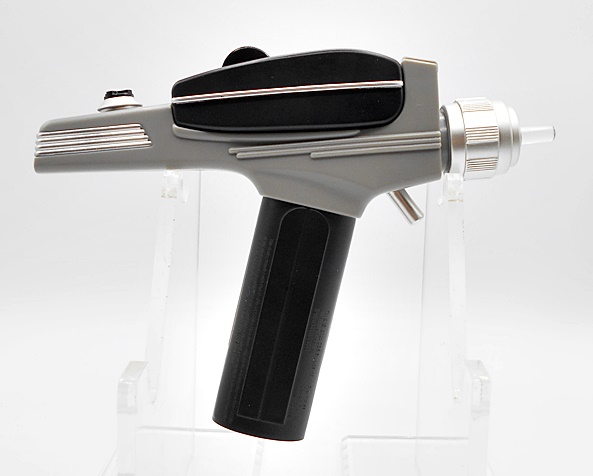
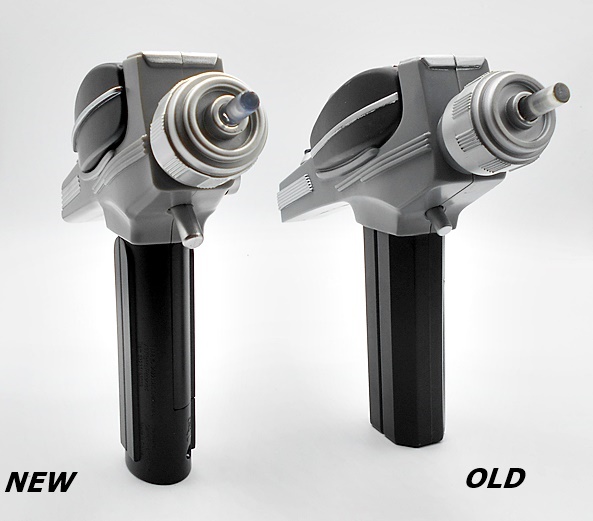
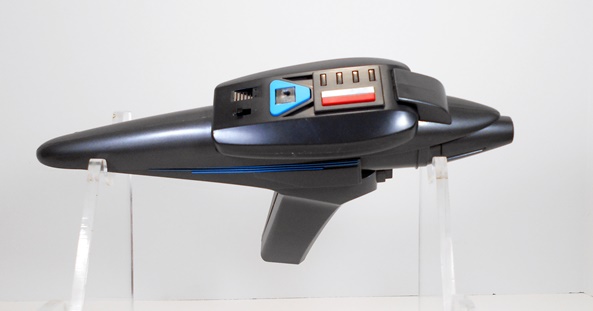
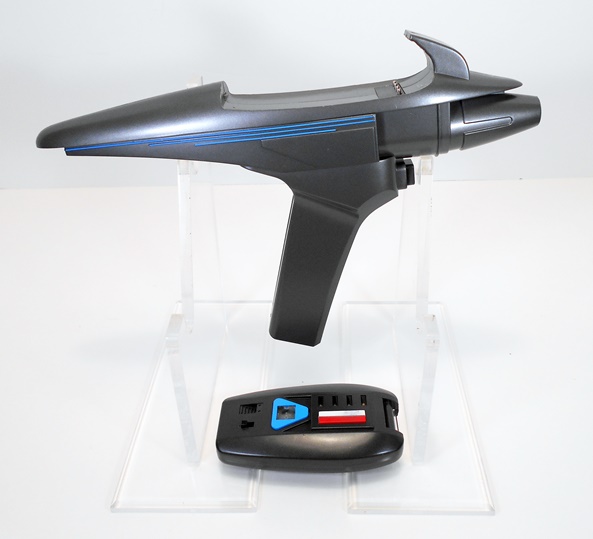
While this Phaser is a bit on the chunky side, I think it still scales fairly well in my adult hand, and most of those chonks are located in the handle, which is odd since this is at least posing as a toy for kids. I think the two-tone gray and black look good, although I’m more fond of the darker gunmetal gray seen on some of the props. The silver bits feature a very nice quality matte paint, which sort of passes for steel. The profile of the weapon is pretty solid, and it isn’t until I sit it next to a more accurate reproduction that I can see the differences, so that’s a good thing. Sadly, the Type-I Phaser on top is not detachable, but I wasn’t expecting it to be since it was fixed in place on the 90’s release as well. The Dilithium Crystal Cell (that silver disk on the side) is used to turn the toy off and on or set it in the limited function Demo mode. Probably the most disappointing thing here is the plethora of screw holes scattered about the left side of the weapon. As we’ll see in a bit, it’s actually worse than the 90’s release, which is rather baffling to me. It’s a shame they couldn’t plug these up.

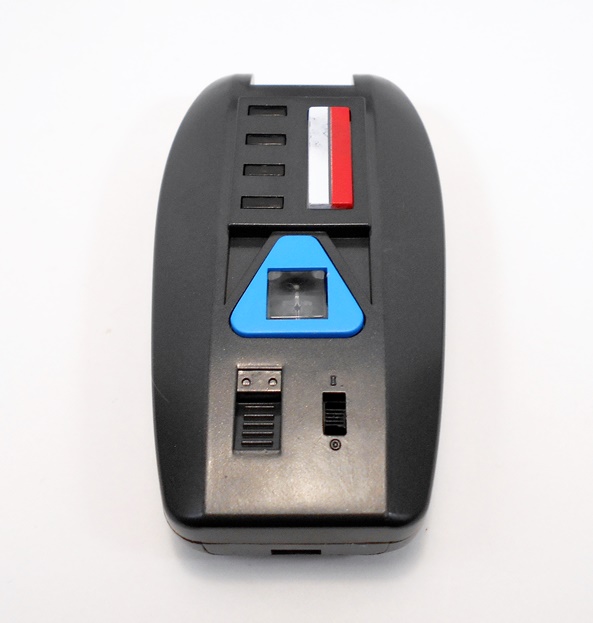
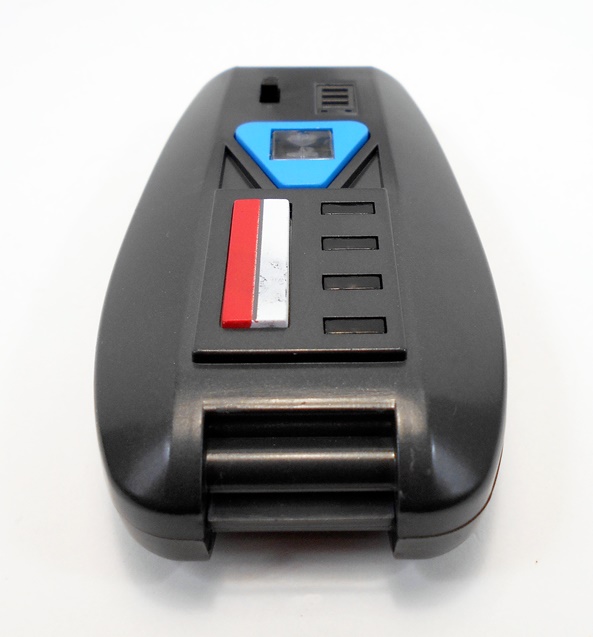
From the top view, the settings dial on the Type I unit is a sticker, which looks OK, but I worry about it, since the sticker fell off my 90’s Phaser a long time ago. Ah, but that was thirty years ago, and thirty years from now I’ll be long dead and gone, so no worries! The speaker holes in the screen on the Type I unit is a bit of an eyesore, and that’s a carry over from the 90’s toy as well. The thumb wheel on the Type I does not move, but the settings knob on the back of the Type II unit does, and this is what’s used to change from Stun to Kill to Overload.
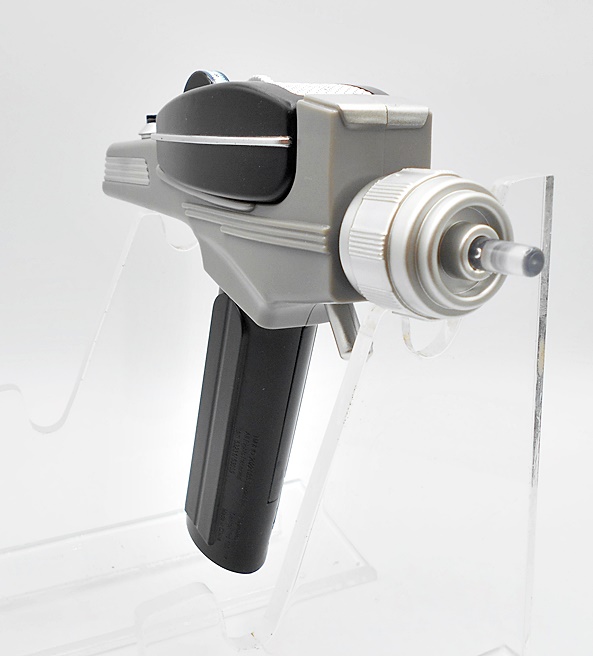
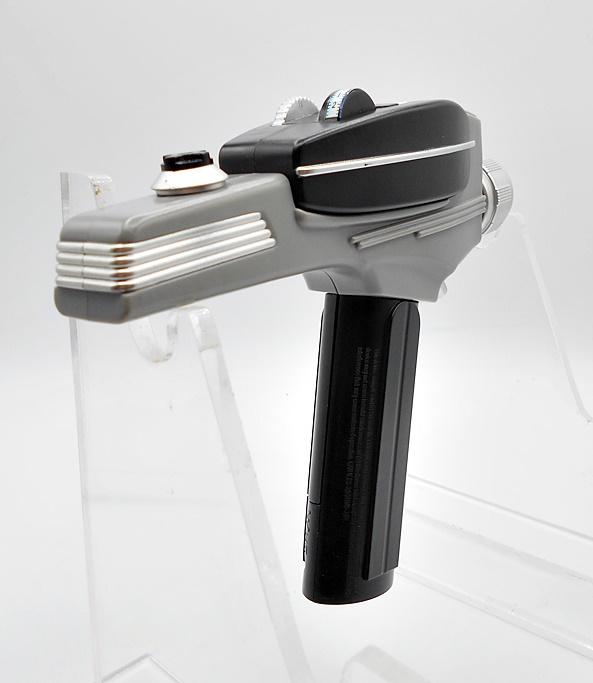
Everything else on this piece looks pretty good. I’m glad that Playmates didn’t try to put a belt clip onto it, but I may wind up putting a piece of velcro on the handle to attach it to my official Starfleet issue slacks. Let’s check out the electronics!

All three settings sound great and boy is it loud! The emitter lights up blue or red depending on the setting and even the selector knob lights up when firing, although it only lights up blue. All in all, I’d say the electronics on this one are vastly improved over the 90’s one, but given the march of thirty years of technology, I’d say that was expected.
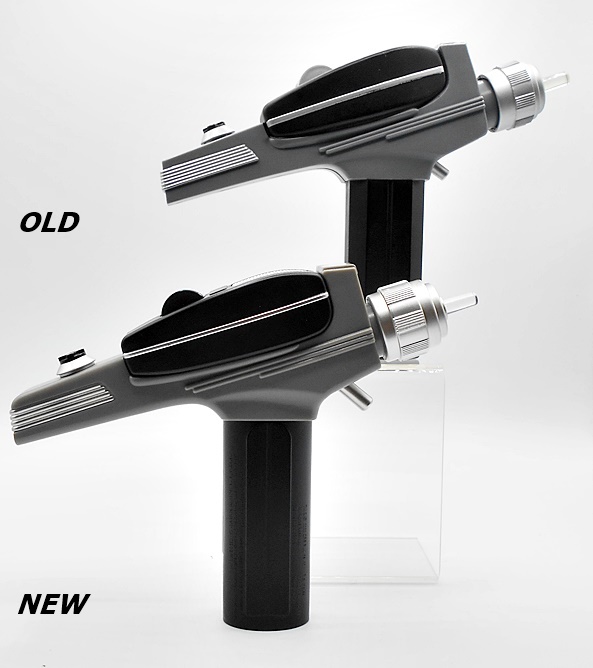
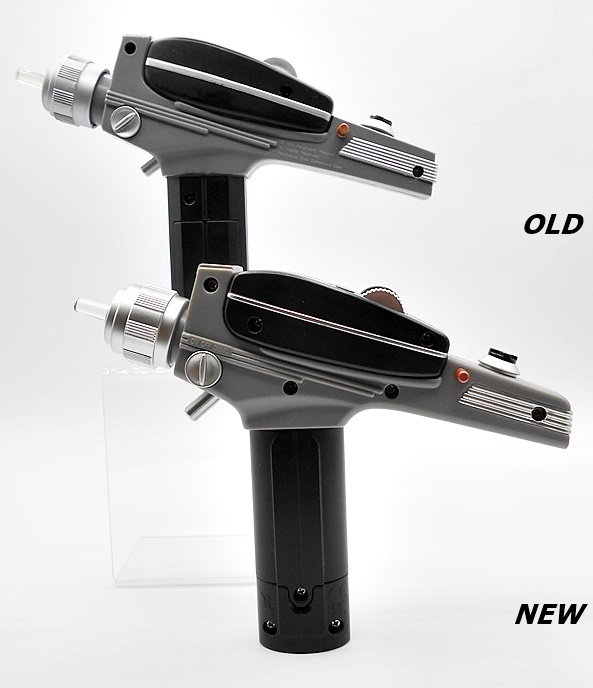
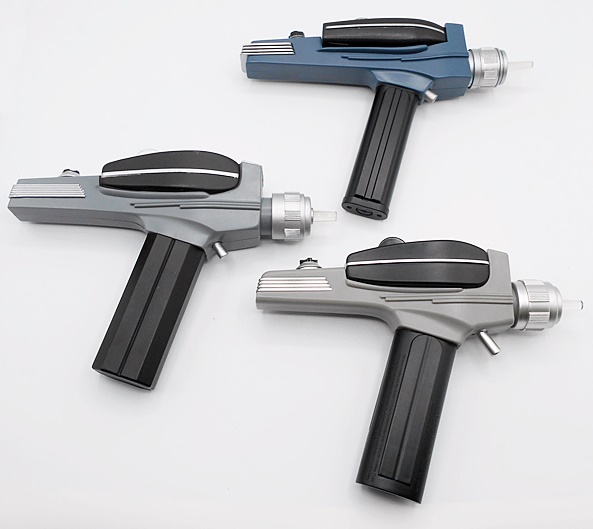
And here are some comparison shots, and while these are very similar toys, I think most of the subtle differences come down to just personal preference. The props used in the series varied a bit and I can write off the changes here to revisions Starfleet may have made to the design over the years. The electronics are definitely improved, but , if we’re going by the aesthetics alone, I have to give the nod to the older release simply because it has less exposed screws on the one side.
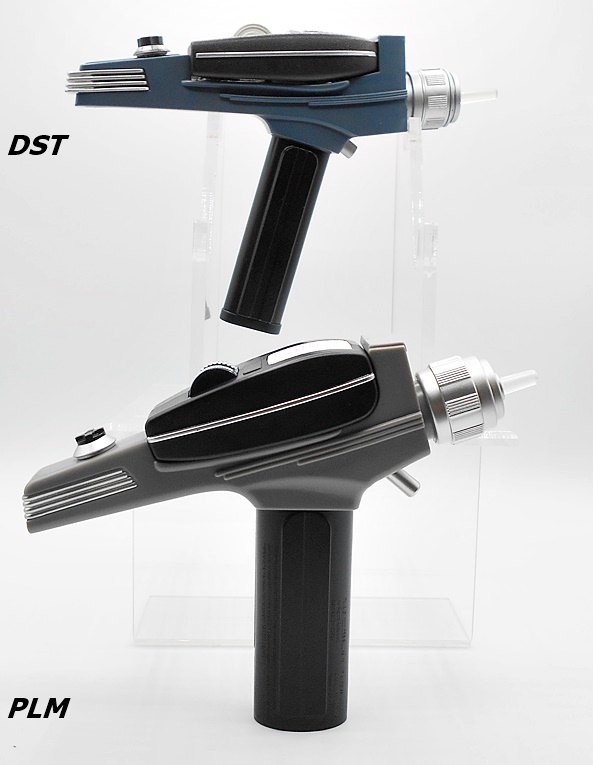
And here’s a quick comparison of the new Playmates Phaser with the Diamond Select version from a little while back. DST’s version is an absolutely beautiful toy and a much more faithful reproduction of Starfleet’s sidearm. It’s proportioned much better and you just can’t beat having the removable Type I unit with it’s own electronics. I also greatly prefer the blue-gray finish to the body of the Type II housing. It’s a shame these aren’t still on the market, and I’d love to see DST reissue these. OK… Let’s move on to the Communicator.
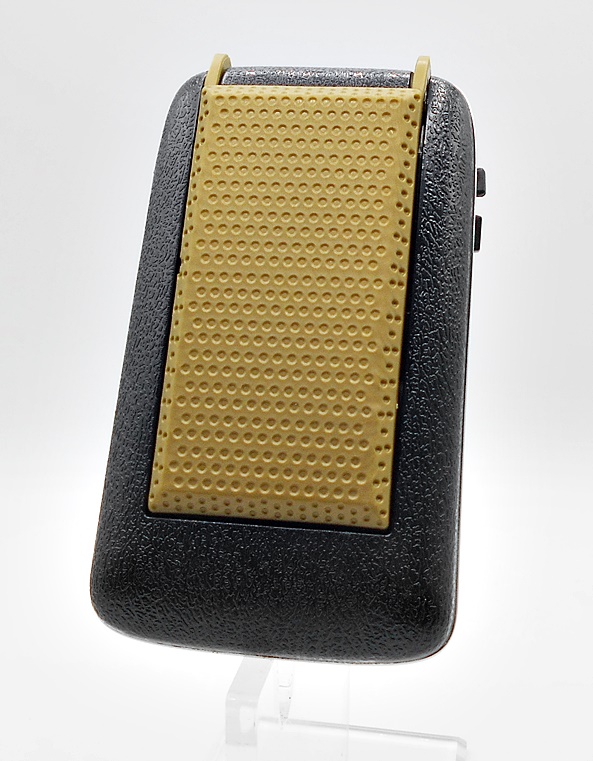
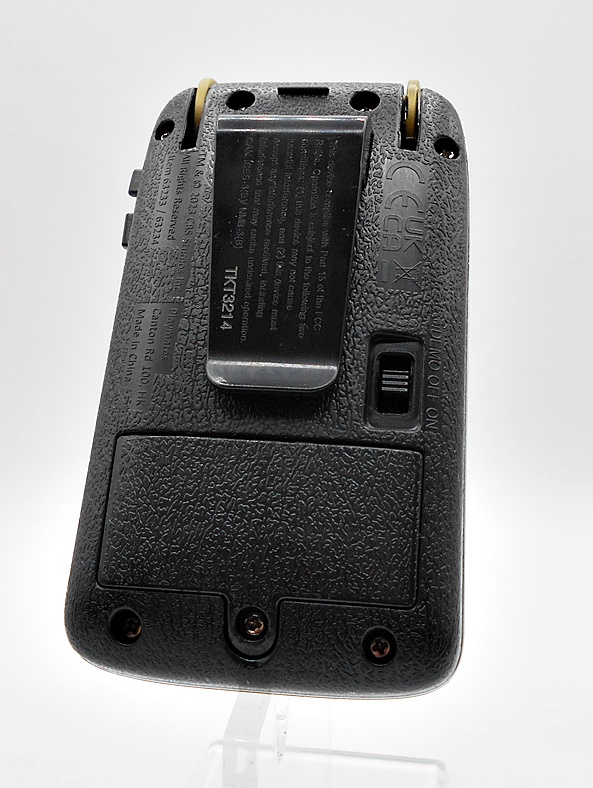
So, the first thing I noticed about the Communicator when taking it out of the box is the dull gold finish on the antenna cover, and boy did that disappoint me. It just looks incredibly cheap and wrong. Once I got past that, I found that the toy is pretty well sized with the correct texturing, and two side buttons just like the 90’s version. There is a belt clip on this one, just like the previous release, and that really doesn’t bother me at all. On the back you also get the switch that turns the toy on and off, or sets it into Demo mode. They could have done a better job concealing this, but it’s not a big deal to me.

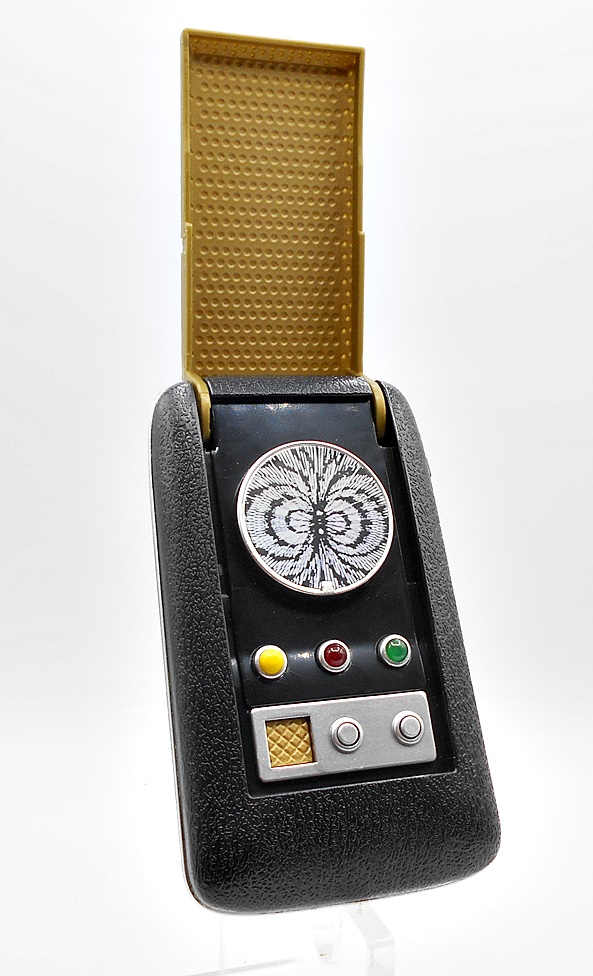
Pressing the lower side button will activate the incoming call signal, while the upper side button will spring open the antenna cover. That’s definitely an improvement over the old one, which had to be flipped up or opened manually. I’ll be honest, that never bothered me too much because the actors used to have to flip open the prop manually on screen most of the time anyway. The interior panel of the toy looks great, with the yellow “light” just a painted dummy and the other two being actual lights. Pressing the left silver button produces a sound clip and the right button cycles through some voice clips from the show.

Like the Phaser, the audio is really loud and sounds crystal clear. My only real complaint here is the choice of clips. Most of them are taken from clips of Kirk talking to the ship on the Communicator. As a roleplay toy, I really would have preferred all the clips being the Enterprise communicating with you. You only really get that with the two Spock clips. Sadly, my older Playmates Communicator stopped working and I really don’t remember what it had to offer, so I can’t offer my preferences between the two on that front.
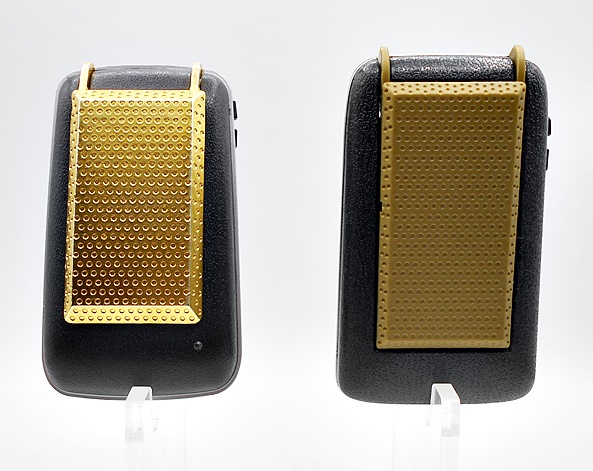
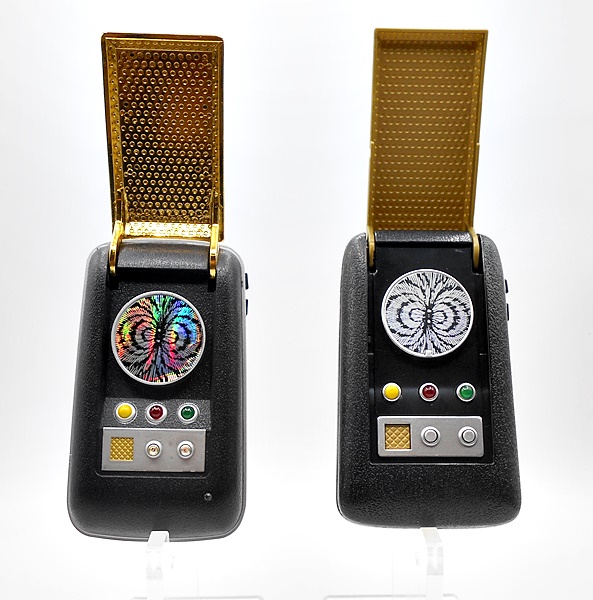
But aesthetically, the older one is the clear winner, thanks mostly to the use of the gold foil paint on the antenna cover. It’s weird how such a small detail could make such a big difference. I also like the hologram sticker used for the screen. It just gives the toy a bit more flash. There are some subtle changes to the size and contours, but I don’t really have a preference on either of those details.
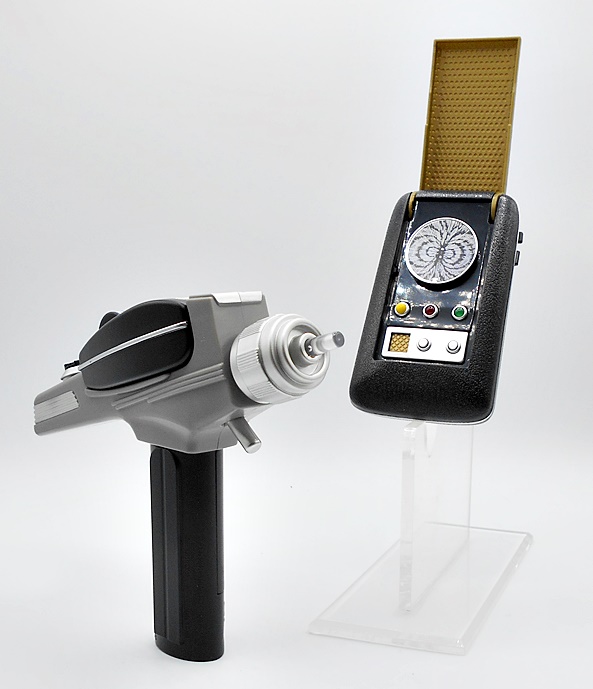
Both of these toys retail for $24.99, which I think is pretty damn good for what you’re getting. Although, the Phaser has been out for a while, so it seems to be selling for closer to $30 these days. Both are really good toys and even decent accessories to complete your Cosplay for the next big convention. But with that having been said, they aren’t a substitute for higher end, or even middle of the road prop replicas or the old garage kits. I would rate the Phaser higher than the Communicator because the flat gold paint really does bug me a lot, but maybe that’s just me. If you’re looking for something better and don’t want to invest in a prop replica, the DST stuff is definitely the best bet, although those are getting a little pricey these days too. If you’re in the market, I’d say pick these up, because who the hell knows when we’re likely to get official releases of these again.
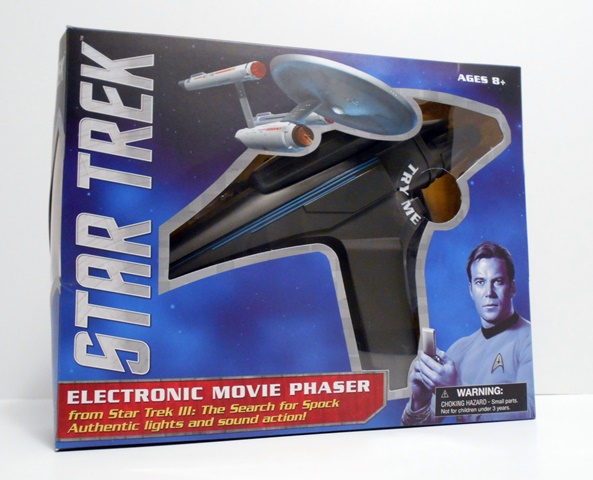
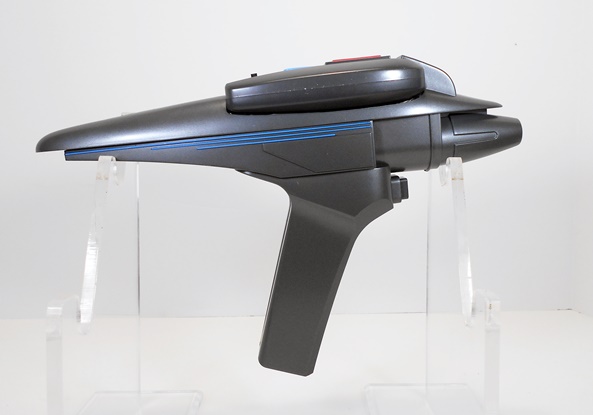
Star Trek III: “The Search for Spock” Hand Phaser by Diamond Select

I’ve been an aficionado of Starfleet sidearms for as long as I can remember now. I’ve had them all from horribly cheesy Next Gen Playmates versions all the way up to a beautifully professionally-machined Classic Series prop that I bought at a Trek Convention back in the early 90’s in NY and later had to sell so that I could afford to eat while paying for Grad School. Today I’m checking out Diamond’s brand new Star Trek III phaser. Hopefully with this baby I’ll have Mr. Adventure eating out of my hand.

st3phasbx

If you own any of Diamond’s Starships, you should recognize the deco used for the box. I’m not a big fan as it mixes Classic Trek imagery with what is a Feature Film collectible. Why couldn’t we get a picture of Admiral Kirk in his tunic on the box, or at least movie enterprise. Blah! It’s nothing special and that’s probably a good thing because mine came to me smashed to hell. Luckily it was the only thing in the box that was as it was part of my Pile of Loot and there were some pricier pieces in there.

st3phas2

st3phas1

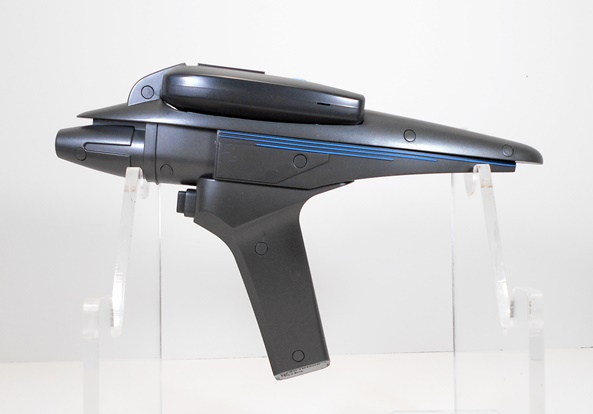
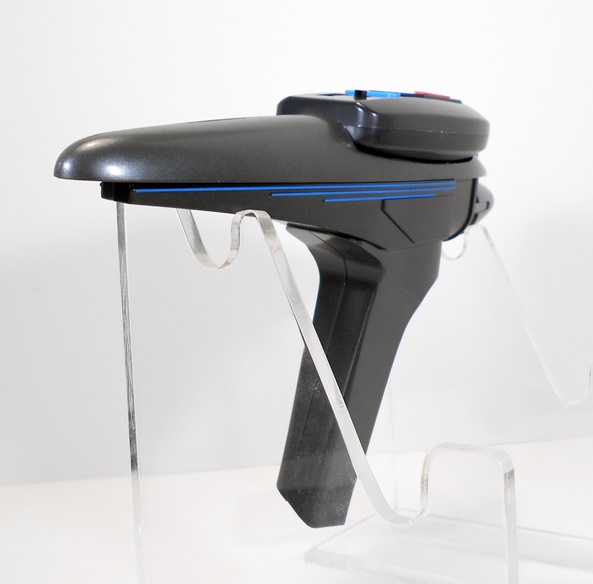
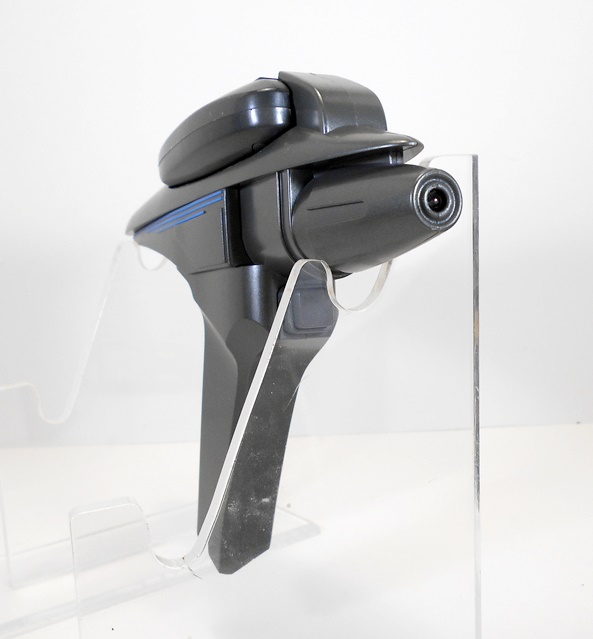
Straightaway, let me say that this is my second favorite phaser design in all of Star Trek and second only to the “Battle Phaser” which was introduced in Star Trek V and used during the raid on Paradise City. This version takes the general design of the Classic Series sidearm, which I’m also incredibly fond of, and makes it all sleek and sexy. There aren’t a lot of details on it, apart from the blue striping down the sides, just a lot of smooths surfaces and curves. To me, this design is totally convincing as a futuristic weapon and Diamond’s version does a pretty good job of reproducing the look of the prop and even uses plugs to cover the screws on one side. There are some stray scratches on mine, which could be counted against it on a QC level, but they kind of work as weathering and don’t bother me so much.

st3phas5

st3phas4

st3phas3

Virtually all the detail on this piece is found on the control panel on top of the weapon and even that is very minimalist in appearance. You get an On-Off switch, which sadly looks like exactly what it is: A switch for a toy, rather than something integrated into the fictional design of the weapon. I don’t mind them using a standard switch, but I wish it was concealed a little better. The blue triangle lights the weapon’s ready status and there are four red lights and a power settings button to cycle through the four force settings.

st3phas7

st3phas8

Of course, just like with the Classic Series phaser, the top unit here is a detachable self-contained palm phaser that nests with the larger hand-grip housing. When removed and used on its own, the triangular button on top becomes the trigger. This piece looks really nice and feels great in the hand. My only gripe here is that the white on my power cycle button has some messed up paint. Again, I’ll likely just write it off as weathering, but clearly it’s a pretty big QC issue of the type that DST seems to continually have problems with.

st3phas6

The electronics in this piece are passable, but because the speaker is located on the bottom of the palm unit, the sounds are pretty muffled when it’s docked with the grip housing and that’s pretty disappointing. The SFX include a power up beep when it’s turned on and off, and four very slightly different sounds for each of the four force settings. Honestly, I can barely tell the difference between the first three.

As for lights, the blue power light on the top trigger button remains lit when the phaser is on. The force setting lights cycle until you choose a setting, which is done by repeatedly pressing the setting button. There’s a red light in the beam emitter of the hand grip housing and an elongated series of red lights in the smaller palm phaser’s beam emitter. Lastly, if you hold down the setting button and the trigger on the housing the phaser will prep for Overload. Pressing the top trigger button will initiate the Overload Sequence. It’s all pretty basic stuff. Nothing amazing, but adequate.

st3phas9

Overall, I think this thing is OK, but I wanted to like it more than I do, especially since I love the design so much. The QC issues are perhaps minor but still troublesome and I think the electronics could have been designed a little better. I can appreciate wanting to hide the speaker under the palm phaser, but why not show the same courtesy for the power button? And the emitters could have used some brighter LEDs. The LED they used for the Excelsior’s deflector dish can burn out someone’s retina and I would have loved to see something similar on this piece. All in all, it feels like a step down from DST’s Classic Series phaser that I own from quite a few years back. At $35, I’m not sorry I bought it, it’ll look great on my wall and it’s perfect for anyone looking to cosplay, but in the end I had hoped for something a little better.

Star Trek: Starfleet Phaser (2009 Movie) by Playmates

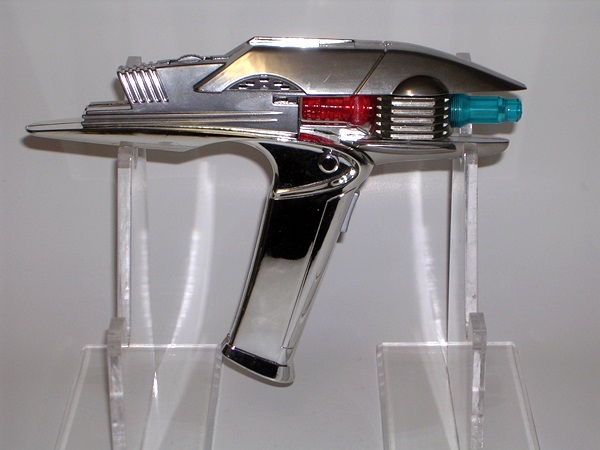
Today’s feature is going to be a quickie, because I’ve got a bunch of stuff to do. No, I mean actual STUFF, not just drinking. I set about to think up something quick and easy and then I remembered that we’re less than two weeks away from the premier of Star Trek Into Darkness. A quick dig through one of my Toy Closets and… voila… I found this little beauty from the original film. Playmates certainly had their share of stumbles handling the toys for the first Abrams Trek movie, but their hand phaser was not one of them. This thing is definitely a cool little toy. Let’s take a look!

TK001

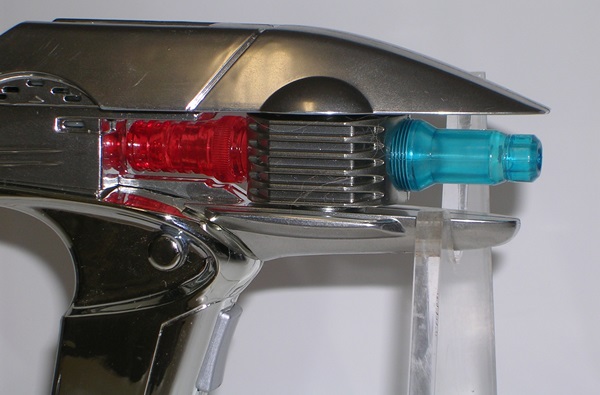
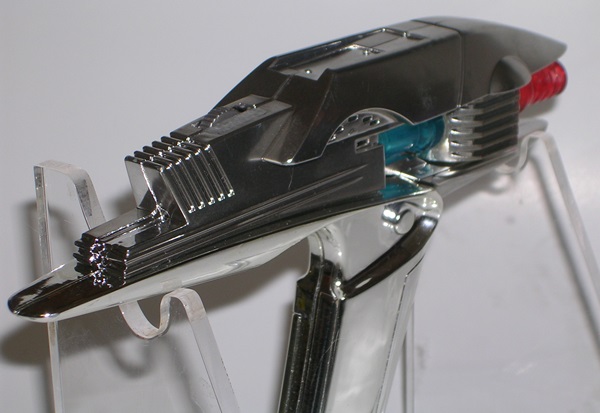
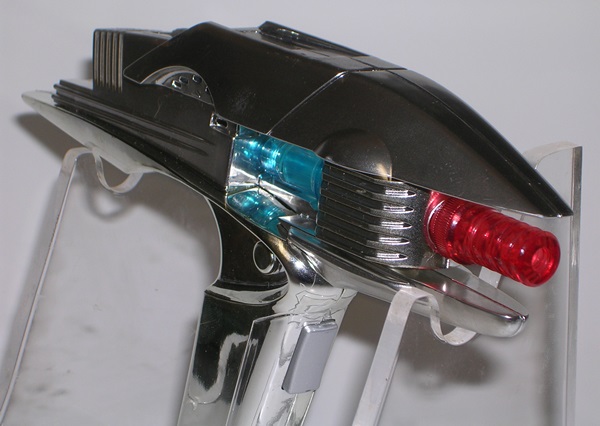
The hand phaser comes sealed in a clamshell with a cool, curvy bubble. It’s not collector friendly by any stretch, as you’ll practically need a phaser to cut it out of there, but it is very nice to look at. There’s also a “Try Me” hole that lets you pull the trigger, but because of the moving parts, you can only try it in vaporize mode. Still… pretty nice. The 2009 Phaser is one of my least favorite of all of Starfleet’s hand phaser designs, but that doesn’t mean I dislike it. It certainly reflects the alternate Abrams timeline in which Kirk’s dad dying prematurely suddenly gave Starfleet engineers a collective chrome fetish. It borrows a bit from past phaser designs, and it does manage to capture at last the profile of a Classic Starfleet phaser while tossing in a whole lot of originality.

DSCN1067

DSCN1068

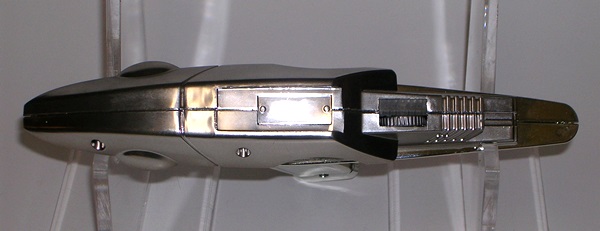
In hand, this phaser looks pretty amazing. The chrome finish looks good, and apart from some plastic seaming on the top, it doesn’t look overly toyish. The size is also a pretty comfortable fit in my hand. All too often Role Play toys tend to go too big and chunky or undersized to better fit into kid’s hands. Damn toy companies pandering to kids, with their tiny hands! It’s the extremely light weight that betrays this piece as an inexpensive toy, as there’s virtually no heft to it at all. One side looks totally clean, while the other features some exposed screw heads, the copyright stamp, and the “Hey asshole, don’t throw your old batteries in the garbage” icon.

DSCN1069

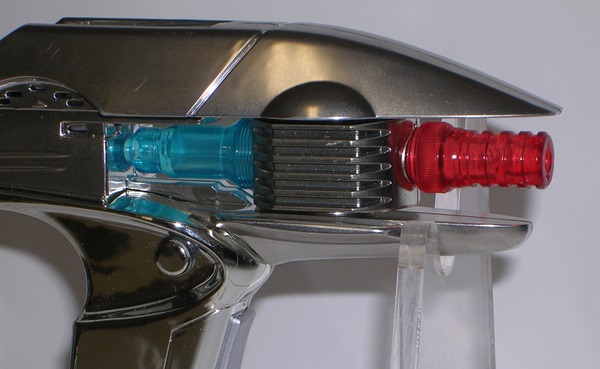
The thing I like least about this phaser design is the switch-gimmick. Setting aside the toy talk for a moment… The engineering on the design uses two different emitters: A red one for vaporize and a blue one for stun. The emitters sit on opposite sides of a revolving piece, so when the user switches from one setting to the other, the appropriate emitter snaps to the front. They made a point of showing this in the film and when they did, I wanted to stand up and scream, “WTF??? Pause the movie… I need to see that shit again!” The design goes out of its way to be more complex than it needs to be, and much like the old Automatic vs Revolver debate, it seems like it’s just something extra to malfunction on the weapon. There’s nothing worse than when you’re in a shootout with some Klingons and your phaser jams. Now, I’m no 23rd Century weapons engineer, but I can’t see why it would be necessary to do this over the old elegant phaser design.

DSCN1071

DSCN1072

Anyway, getting back to the toy… Playmates’ phaser replicates the moving emitters… sort of. If you have the phaser in the stun position, you can press a button on the side of the handle to automatically switch to the vaporize position. You cannot, however, switch back unless you manually re-position it. It seems like it should have been easy to make it work both ways, but whatever.

DSCN1075

The rest of the electronics feature an activation wheel on the top. Rotate it toward you and the panel lights up a bright greenish yellow and the phaser makes a nice, loud activation sound. This one is my favorite of the toy’s FX. The trigger activates the emitter light and sounds depending on which setting you have it on. The red light is very bright, and while the sound is loud, it sounds a bit abbreviated. I think that’s because the Abrams phasers shoot pulses and not sustained beams. I hate that, but in fairness to Abrams, I think that shit started during The Next Generation. Pulse phasers are evil, they just don’t feel like Star Trek to me. The stun setting on the toy is all around crap. The light is really dim and it sounds like the phaser is either malfunctioning or farting.

DSCN1077

Even with its flaws, this phaser is a pretty cool toy. I think it originally sold for around $15, but chances are you can still find it on clearance at your local Toys R Us. One of the TRU’s here still has an endcap of these and the figures. Hell, even the local Books-A-Million, in their bizarre transformation into part book store and part toy store, still has these. None of this stuff sold well because there probably hasn’t been a kid since the early 70’s that said, “Hey let’s get our phasers and go outside and play Star Trek.” Sad but true. But this phaser is still a wonderful piece for convention cosplay and a nice addition to any Trek arsenal on a budget, particularly if you want to display all the designs. Now, if you’ve got a little extra gold-pressed latinum to spend, Quantum Mechanix made a remarkably nice prop replica of this piece for under $100, which can still be found at various e-tailers around the InterWebs. (If you have a little more money to spend, they also make a $10,000 Enterprise model!) I don’t own their phaser, but I got a chance to hold one at a convention. The static model doesn’t feature any FX or moving parts, but it does look and feel really nice in hand.